A well-maintained tennis court provides a safer, smoother, and more enjoyable playing experience. However, constant use, changing weather, moisture, and natural aging can gradually damage the court surface. Recognizing the warning signs early can help prevent minor issues from turning into costly repairs.
Regular tennis court maintenance is essential, but there comes a point when cleaning and routine repairs are no longer enough. Here are five signs that your court may need professional tennis court resurfacing.
1. Visible Cracks Are Spreading Across the Court Surface
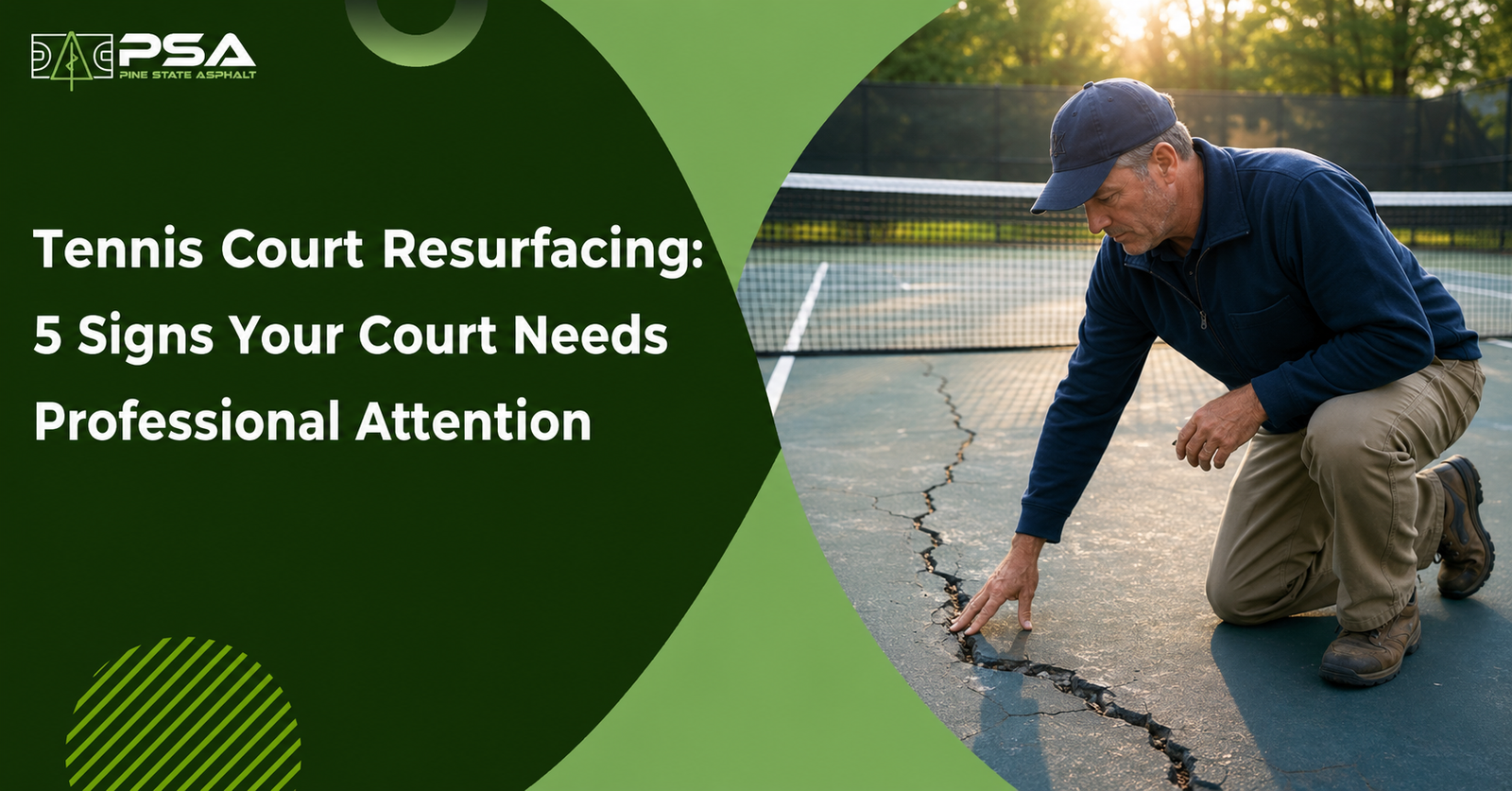
Small surface cracks may seem harmless at first, but they can quickly become a larger problem. Water can enter these cracks, and repeated freezing, thawing, and temperature changes may cause the damage to expand.
Look for:
- Hairline cracks appearing in multiple areas
- Wider cracks that continue to spread
- Cracks around high-use areas
- Repaired cracks that have reopened
- Uneven surfaces developing around damaged sections
When cracks become widespread, simply filling individual areas may provide only a temporary solution. Resurfacing a tennis court can restore the playing surface and address visible wear before more extensive repairs are needed.
2. The Court Surface Is Fading or Showing Excessive Wear
Over time, sun exposure, rain, snow, and regular foot traffic can cause the court’s color coating to fade. A faded surface does not always mean immediate resurfacing is required, but severe wear can affect both appearance and performance.
Signs of excessive surface wear include:
- Significant color fading
- Worn areas near baselines and service boxes
- Peeling or flaking coatings
- Rough or inconsistent surface texture
- Exposed areas where the protective coating has worn away
Professional tennis court resurfacing applies new surface coatings designed to improve appearance, durability, and playability. Scheduling resurfacing at the right time can also help extend the life of the existing court structure.
3. Water Is Pooling on the Tennis Court
A tennis court should allow water to drain properly. If puddles remain long after rainfall, the issue could indicate surface depressions, drainage concerns, or changes in the court’s condition.
Pay attention to:
- Standing water after rain
- Recurring puddles in the same locations
- Low spots or visible depressions
- Areas that remain damp longer than the rest of the court
- Surface damage developing around standing water
Persistent moisture can accelerate surface deterioration and contribute to cracking. As part of proper tennis court maintenance, drainage and water-related issues should be inspected before deciding on the best resurfacing solution.
4. The Playing Surface Feels Uneven or Has Lost Its Smooth Finish
A quality tennis court should provide a consistent surface for players. If the court feels rough, uneven, or unpredictable, it may be time to consider professional attention.
Common warning signs include:
- Uneven ball bounce
- Rough or worn playing areas
- Surface depressions
- Raised sections around cracks
- Noticeable changes in texture across the court
These problems can affect game performance and may create potential safety concerns for players. Professional resurfacing a tennis court can help restore a smoother, more consistent playing surface while improving the overall condition and appearance of the court.
5. Repairs Are Becoming More Frequent
Occasional repairs are a normal part of tennis court maintenance. However, if you are repeatedly fixing the same cracks, worn areas, or surface problems, the court may need a more comprehensive solution.
Consider professional resurfacing when:
- Crack repairs keep reopening
- Surface patches are becoming more noticeable
- Maintenance costs continue to increase
- Multiple areas of the court need repair
- The court has not been resurfaced for several years
At this stage, investing in tennis court resurfacing may be more practical than continuing with repeated temporary repairs.
What Affects Tennis Court Resurfacing Cost?
The tennis court resurfacing cost can vary depending on the overall condition of the court and the amount of preparation required. Courts with widespread cracks, drainage issues, or significant surface damage may require additional repairs before new coatings can be applied.
Key factors affecting cost include:
- Size and condition of the tennis court
- Number and severity of cracks
- Required surface preparation
- Drainage or leveling concerns
- Type of resurfacing system used
- Additional repairs needed before resurfacing
A professional inspection is the best way to understand what your court needs and determine whether resurfacing is the right solution.
See also: List of 8 comprehensive strategies for improved physical and mental wellness
Protect Your Investment With Professional Tennis Court Maintenance
Ignoring early signs of surface damage can lead to more extensive repairs over time. By addressing cracks, fading, drainage problems, and uneven areas early, you can help protect your investment and keep your court ready for play.
If your court is showing several of these warning signs, professional tennis court resurfacing may be the next step. Pine State Courts can evaluate your court’s condition and recommend the right resurfacing and tennis court maintenance solution to improve its appearance, performance, and long-term durability.