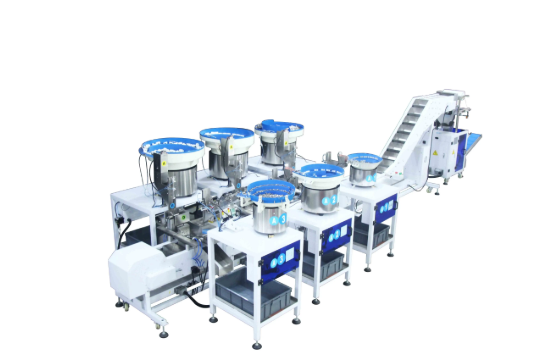
Choosing a packaging machine is a major decision for any food producer, pet food company, contract packer, or consumer-goods manufacturer. The equipment affects filling accuracy, production speed, package appearance, labor requirements, product protection, and long-term operating costs. A machine that looks affordable at the quotation stage can become expensive if it creates excessive waste, requires frequent adjustments, or cannot handle future product variations.
Packaging machinery is not a one-size-fits-all purchase. A powder, liquid, granule, snack, frozen product, sauce, or pet food formula may require a different feeding and sealing method. The package itself also matters. Premade pouches, roll-film bags, spout pouches, vacuum packs, jars, cans, bottles, cartons, and cases each need different equipment arrangements.
The best buying process begins with the product and package, not with a machine catalog. This guide explains the main factors to evaluate before selecting individual equipment or a complete packaging line.
Begin With the Product Specification
The product’s physical characteristics determine much of the machine design. Start by documenting whether the product is a powder, liquid, paste, granule, solid piece, or mixed product. Record its density, flowability, moisture, temperature, stickiness, fragility, particle size, and tendency to create dust.
Powders may require auger filling, vacuum assistance, or dust-control features. Free-flowing granules and snacks are often compatible with multihead weighing systems. Liquids and sauces may need piston, pump, or flow-meter filling. Sticky products can require special contact surfaces and anti-drip controls. Fragile products need gentle handling to reduce breakage during feeding and transfer.
For pet food, product size and shape can vary considerably between kibble, treats, freeze-dried pieces, wet food, and supplements. A system designed for small uniform granules may not perform well with irregular treats. Provide actual product samples during the testing stage so the supplier can assess feeding behavior and filling accuracy.
See also: The Importance of Medicine and Healthy Living in Daily Life
Select the Appropriate Packaging Format
The package format influences machine layout, material cost, shelf appeal, and customer convenience. Choosing the format early prevents costly redesign later.
Premade Pouches
Premade pouch machines open, fill, and seal bags that have already been manufactured. They can support stand-up pouches, flat pouches, zipper bags, vacuum pouches, and other customized formats. This approach is useful when a brand wants high-quality printed bags, special shapes, resealable features, or small and medium production runs.
Premade pouch systems may also be suitable for products that are difficult to form from roll film. However, the pouches must arrive with consistent dimensions and reliable seals. The machine should be tested with the exact pouch material and design that will be used in production.
Form-Fill-Seal Bags
Roll-film machines form the package from a continuous film roll, fill the product, and create the seals in one process. Vertical form-fill-seal systems are commonly used for powders, granules, snacks, pet food, and other products that can be dropped or weighed from above.
These machines can reduce premade-bag costs and offer efficient production. They require careful control of film tracking, sealing temperature, registration marks, and product movement. Film characteristics such as thickness, coating, stiffness, and sealant layer can affect performance.
Spout Pouches
Spout pouch equipment is used for liquids, sauces, beverages, detergents, and other products that benefit from controlled dispensing. The machine may fill a premade pouch or integrate pouch forming and spout insertion, depending on the design.
Spout position, cap style, pouch material, filling temperature, and sealing requirements should be confirmed before purchase. Leakage testing is especially important because a package that looks attractive but leaks during transport can create serious customer and logistics problems.
Vacuum Packaging
Vacuum packaging removes air before sealing and can help protect certain foods, meats, ingredients, and other products. The machine selection depends on the product’s shape, moisture, required vacuum level, bag material, and expected shelf-life conditions.
Test the complete process rather than vacuum strength alone. The package should maintain its seal after handling, storage, and transportation. Product edges, bones, sharp pieces, or oily contents can influence bag integrity.
Decide Between a Single Machine and a Turnkey Line
A single machine may be suitable for a business that already has reliable feeding, conveying, and labeling equipment. A complete line is often more appropriate when a new factory is being built or when several stages need coordinated control.
A typical pouch line may include product feeding, weighing or dosing, pouch loading, filling, sealing, date coding, metal detection, checkweighing, conveying, case packing, and palletizing. Not every product requires every stage, but the equipment must work together at a compatible speed.
Turnkey projects can simplify procurement because one engineering team coordinates multiple machines. They may also reduce responsibility gaps when the line does not perform as expected. Before signing, define which company is responsible for conveyor design, electrical integration, software communication, installation, operator training, commissioning, and final acceptance.
Do not assume that a line is truly turnkey simply because several machines appear in one quotation. Ask for a detailed layout, utility list, scope of supply, performance guarantee, and responsibility matrix.
Match Output to Real Production Needs
Machine capacity should be based on realistic production requirements rather than the highest number shown in a brochure. Determine the desired packages per minute, daily operating hours, number of shifts, product changeovers, and expected future growth.
A machine rated for maximum speed may achieve that result only with a particular product, package size, and operating condition. Actual output can be affected by product flow, pouch dimensions, sealing time, operator loading, material changes, rejected packages, and cleaning intervals.
Ask the supplier to state stable output using your product and packaging material. It is also useful to calculate effective output, which includes normal stoppages and quality checks. A slightly slower machine with reliable operation may produce more saleable packages per day than a faster machine that frequently stops.
Evaluate Changeover and Cleaning Requirements
Food and pet food facilities often handle several recipes, flavors, sizes, or packaging formats. Changeover time therefore has a direct effect on productivity. Ask how quickly the machine can change between products and which parts must be adjusted or replaced.
Look for accessible contact parts, clear adjustment points, tool-free components where practical, recipe storage, and easy-to-read controls. The machine should allow operators to repeat settings accurately instead of relying on guesswork.
Cleaning and sanitation are equally important. Food-contact areas should be designed for practical inspection and cleaning. Confirm whether components can be removed safely, whether washdown is permitted, and how the design addresses dust, moisture, product buildup, and cross-contamination.
Pet food lines may require frequent flavor or formula changes. A hygienic design and well-planned cleaning procedure can reduce downtime and protect product quality.
Check Packaging Material Compatibility
A packaging machine is only as reliable as its compatibility with the film, pouch, label, cap, or container used in production. Provide the supplier with accurate material information, including film structure, thickness, dimensions, sealant type, pouch features, and printed registration marks.
Flexible packaging may include multilayer films with different stiffness and heat-sealing characteristics. A film that works well on one machine may require different temperature, pressure, dwell time, or jaw design on another. Test the intended material at production speed and under realistic environmental conditions.
For premade pouches, inspect dimensions, zipper alignment, opening quality, gusset shape, and seal area. For roll film, verify tracking, forming-collar performance, sealing, cutting, and print registration. Material testing before purchase can prevent long delays after the machine arrives.
Assess Filling Accuracy and Product Protection
Filling accuracy affects regulatory compliance, giveaway, customer trust, and raw-material costs. Ask how the machine measures the product and how it compensates for changes in density, flow, or particle size.
Weighing systems should be tested with actual product samples. Powder fillers may need controls for bridging, dust, and inconsistent flow. Liquid fillers should be assessed for viscosity, foaming, dripping, and temperature variation. Multi-product lines may require separate recipes and carefully managed contact parts.
The packaging process should also protect the product. Excessive dropping, vibration, compression, or heat can damage snacks, delicate treats, powders, or temperature-sensitive contents. Review the path from feeder to final package and identify points where product quality may be affected.
Review Controls, Sensors, and Safety Features
Modern packaging machines often use programmable logic controllers, touchscreens, sensors, servo motors, and data collection systems. These features can improve repeatability and make troubleshooting easier, but only when they are configured clearly for operators.
Ask which components are used for controls, motors, sensors, drives, and safety systems. Widely supported components may simplify local maintenance and spare-parts sourcing. Confirm whether the software supports recipe management, fault history, remote diagnostics, and production data where needed.
Safety should include guarding, emergency stops, interlocks, clear warning labels, and safe access for cleaning and adjustment. The supplier should provide operating manuals, risk information, electrical drawings, spare-parts lists, and training materials in a language your team can use.
Compare Suppliers Beyond the Purchase Price
When researching equipment sources, packaging machine manufacturers in China can provide a useful starting point for comparing pouch systems, filling equipment, turnkey lines, and food or pet food applications. The shortlist should then be narrowed by relevant experience, engineering capability, factory testing, export support, and after-sales service.
A supplier with a large catalog is not automatically the right choice. Look for experience with your actual product and package format. Ask for videos or references that demonstrate comparable equipment in operation, but verify whether the example uses the same product, film, speed, and package size.
Important questions include:
•Does the supplier manufacture the main machine or mainly integrate outside equipment?
•Who is responsible for complete-line performance?
•Can the supplier test actual product and packaging materials?
•What is included in installation and commissioning?
•Which spare parts should be purchased with the machine?
•How quickly can technical support respond after delivery?
•Is remote troubleshooting available?
•What training will operators and maintenance staff receive?
•What are the warranty exclusions and service conditions?
Clear documentation is a sign of a more dependable purchasing process.
Plan Factory Acceptance Testing
Factory acceptance testing should take place before shipment whenever possible. The test should use the agreed product, packaging material, package size, and machine settings. It should measure output, filling accuracy, seal quality, rejection rate, changeover performance, and safety functions.
Define acceptance criteria in writing before the test. For example, specify the target speed, acceptable weight tolerance, maximum leak rate, package appearance, and operating duration. If the machine fails to meet an important requirement, document the corrective action and retest plan.
After installation, a site acceptance test should confirm that the line performs under the customer’s utilities, environment, operators, and production conditions. Factory testing and site testing protect both parties by turning general promises into measurable results.
Calculate Total Ownership Cost
The purchase price does not represent the complete investment. Include shipping, insurance, import charges, installation, electrical work, air supply, training, spare parts, consumables, maintenance, energy use, film waste, and possible production downtime.
Also consider the cost of changeovers and rejected packages. A machine that saves labor but wastes a large amount of film may not deliver the expected return. A well-designed line can reduce manual handling, improve consistency, and lower the cost per saleable package over time.
Ask for an estimated spare-parts schedule and recommended maintenance plan. Critical items such as heaters, sensors, sealing components, belts, cutting parts, and wear components should be identified before production begins.
Common Buying Mistakes to Avoid
The first common mistake is choosing equipment from a brochure without testing the actual product. Product behavior can be very different from the supplier’s standard examples.
The second is focusing only on maximum speed. Stable output, accurate filling, low rejection, and manageable changeovers are often more valuable than a theoretical top speed.
Another mistake is failing to define integration responsibility. When multiple suppliers are involved, unclear responsibility can cause delays and disputes during commissioning.
Buyers also sometimes underestimate training and maintenance. Even a well-built machine can perform poorly when operators do not understand setup, cleaning, adjustment, and fault recovery. Include practical training in the purchase plan.
Final Checklist
Before approving a packaging machine, confirm that:
1.The equipment matches the product’s physical characteristics.
2.The package format and material have been tested.
3.The target output reflects stable, saleable production.
4.Filling accuracy and seal quality meet written requirements.
5.Changeovers and cleaning are practical for the production schedule.
6.Safety systems, manuals, drawings, and training are included.
7.Integration responsibility is clearly assigned.
8.Factory and site acceptance tests have measurable criteria.
9.Spare parts and after-sales support are available.
10.The total ownership cost fits the business plan.
Conclusion
The right packaging machine should support the entire production strategy, not just fill and seal a package. Start with the product, select the appropriate package format, test real materials, and compare suppliers by engineering ability and service support. Pouch systems, weighing equipment, filling machines, inspection units, and end-of-line automation should be evaluated as parts of one practical workflow.
A careful selection process helps food and pet food manufacturers reduce waste, improve consistency, and respond more easily to changing products and package sizes. For an additional supplier reference, buyers can review Pallas while comparing suitable machinery providers. The final decision should always be based on documented testing, clear responsibilities, reliable support, and the total cost of producing high-quality packages.