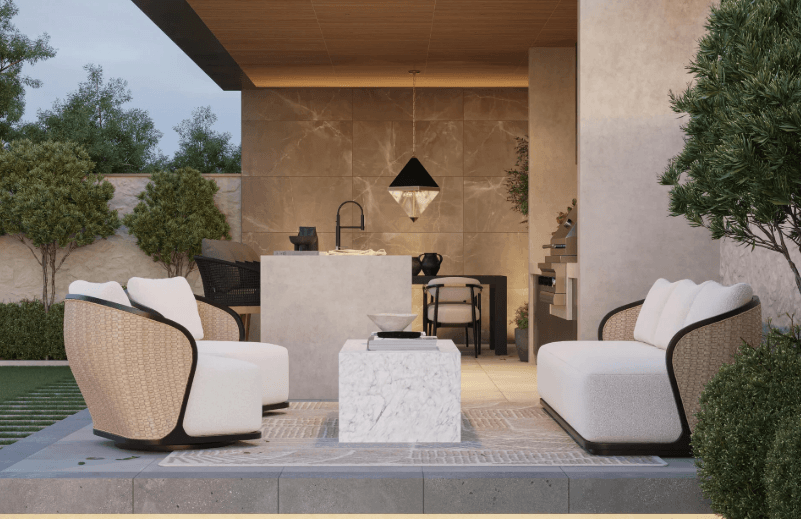
Terrazzo is one of those materials whose aesthetic resonance has proven remarkably durable across dramatically different design periods. Its origins in utilitarian Italian construction, using marble chip fragments in a cement matrix as a cost-effective alternative to solid stone, could not have predicted its current status as one of the most sought-after looks in contemporary interior design. The speckled, polished surface that once defined mid-century public buildings, airports, schools, and government offices now appears in high-end residential renovations, boutique hospitality spaces, and commercial interiors across Australia.
The key to this revival, and to its accessibility across a much wider range of budgets and applications than the original material allows, is the quality and design sophistication that contemporary terrazzo effect tiles have reached.
The Design Lineage Behind the Revival
Understanding why terrazzo reads as contemporary rather than dated requires understanding what design sensibilities it connects with. The pattern is inherently organic and varied, produced by the random distribution of aggregate rather than a mechanically repeated print. No two sections of terrazzo, whether poured or tile-based, are identical. This inherent variation connects the material to the broader design preference for natural, imperfect surfaces that has defined high-end interior design for the past decade.
The colour palette available in terrazzo and terrazzo look tiles for Melbourne homes has expanded significantly from the traditional white and grey combinations. Contemporary terrazzo effect tiles are available with warm terracotta backgrounds and cream aggregate, muted sage grounds with white and black chips, charcoal bases with gold and copper aggregate, and the full range of neutral and coloured backgrounds that allow the material to work across different interior palettes rather than being confined to the monochrome aesthetic of its heritage.
Technical Performance Alongside Aesthetic Appeal
Contemporary terrazzo effect tiles produced in porcelain or ceramic are not just aesthetically sophisticated. Their technical performance in the applications where they are most frequently specified, bathroom floors, kitchen splashbacks, laundry surfaces, and entry hall floors, is genuinely excellent.
Porcelain terrazzo effect tiles achieve the low water absorption, high surface hardness, and chemical resistance that are required in wet and high-traffic environments. The digital printing and surface treatment technology used to produce the terrazzo pattern on porcelain creates a result that is visually convincing and technically superior to poured terrazzo in several respects, particularly regarding stain resistance and ease of cleaning.
The absence of the grout network that poured terrazzo achieves, with a genuinely seamless surface, is one area where the poured original has a visual advantage that the tile format cannot fully replicate. Selecting large format tiles and using a carefully matched grout colour minimises the visual impact of the grout lines and preserves the continuous surface quality that is central to the terrazzo aesthetic.
See also: Signs Your Business Website Needs a Major Upgrade
Applications That Showcase the Material
Terrazzo effect tiles are at their best in applications where the pattern can read continuously across a meaningful area. A bathroom floor in a large-format terrazzo effect tile, running continuously under a frameless shower screen and out to the vanity, creates the immersive surface quality that makes the material compelling.
Feature walls in retail and hospitality environments, where the pattern is seen from a greater distance and the overall impression of the surface reads before any individual detail, are another strong application. The visual interest of the speckled pattern creates an alive, dynamic quality that painted plasterboard cannot match.