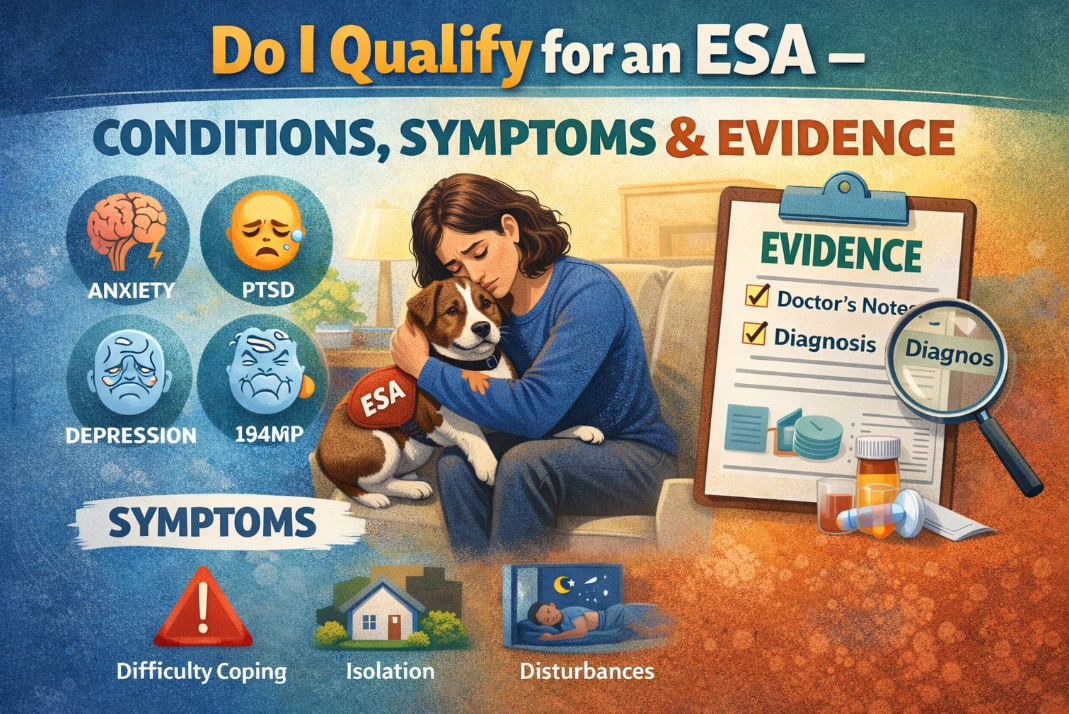
Emotional Support Animals (ESAs) are more than ordinary pets. They provide comfort, reduce stress, and improve overall quality of life for people struggling with emotional or mental health challenges. From easing loneliness to helping manage symptoms of anxiety, depression, or PTSD, the presence of an ESA can make daily life feel more balanced and manageable.
But this brings up an important question—do you qualify for an ESA? Not everyone automatically does, and the process requires understanding a few key things. You need to know which conditions that qualify for an ESA, the specific symptoms clinicians look for, and the type of evidence or documentation needed to support your request.
In this guide, we’ll walk you through it step by step. You’ll learn about the most common qualifying conditions, how professionals carry out the evaluation process, and what you can do to prepare for your consultation with a clinician.
Why ESAs Help
An ESA is not a service animal. It doesn’t need special training. Its purpose is simple—provide emotional comfort. Research shows that spending time with animals can lower blood pressure, reduce loneliness, and ease symptoms of depression or anxiety.
For people struggling with mental health conditions, an ESA can make a huge difference. Daily tasks feel easier, and the presence of the animal can bring stability during stressful times.
Who Typically Qualifies
So, who can qualify for an ESA letter? The answer depends on your mental or emotional health condition. Clinicians look at whether your struggles interfere with everyday life. If yes, an ESA may be considered part of your care plan.
Conditions That Qualify for an ESA
Some common conditions that may qualify:
- Depression – Persistent sadness, lack of motivation, or hopelessness.
- Generalized Anxiety Disorder (GAD) – Ongoing worry, restlessness, or panic attacks.
- Post-Traumatic Stress Disorder (PTSD) – Flashbacks, hypervigilance, or avoidance after trauma.
- Social Anxiety Disorder – Intense fear of social interactions.
- Bipolar Disorder – Episodes of mania and depression affecting daily function.
- Phobias – Extreme fear that disrupts normal activities.
- ADHD – Difficulty focusing, impulsivity, or restlessness.
- OCD (Obsessive-Compulsive Disorder) – Unwanted, intrusive thoughts or repetitive behaviors.
- Stress-related Disorders – Conditions where emotional support eases overwhelming pressure.
Not everyone with these conditions automatically qualifies. Your clinician will assess symptoms, severity, and impact on your life.
Symptoms & Examples
Symptoms play a big role in qualifying. For example:
- Someone with depression may find it hard to get out of bed, but having a dog gives them a reason to walk outside.
- A person with PTSD might sleep better with their cat nearby, reducing nightmares.
- A student with social anxiety may attend classes more regularly when they have the comfort of an ESA at home.
The key is to show how your symptoms interfere with daily functioning, and how the animal helps.
How Clinicians Evaluate
The evaluation process for an ESA letter involves much more than simply asking your doctor to write a quick note. It requires a proper review by a licensed mental health professional—such as a therapist, psychologist, or psychiatrist—who will carefully assess your situation. These professionals must follow certain steps to confirm whether an ESA is a suitable part of your treatment plan.
The evaluation process for an ESA letter involves much more than simply asking your doctor to write a quick note. It requires a proper review by a licensed mental health professional—such as a therapist, psychologist, or psychiatrist—who will carefully assess your situation. These professionals must follow certain steps to confirm whether an ESA is a suitable part of your treatment plan.
- Assessment of Mental Health Condition
- Your clinician reviews your symptoms and medical history.
- They may ask about your daily struggles—sleep, focus, social interaction, or mood changes.
- Determining Emotional Need
- They evaluate whether an ESA would reduce symptoms.
- Example: Does having a pet reduce panic attacks or ease isolation?
- Checking Eligibility for Housing Rights
- An ESA letter must meet Fair Housing Act (FHA) requirements.
- It should confirm you have a mental health disability and that the ESA helps manage it.
- Issuing Documentation
- If approved, you’ll receive an ESA letter on official letterhead with the clinician’s license details.
For details on how to start this process, check out our guide on how to get an ESA letter.
What Not to Say in Evaluations
Being honest is important, but avoid statements that weaken your case. Examples:
- “I just want free housing for my pet.”
- “I don’t have a condition, but I think it would be nice.”
- “My friend got one, so I want one too.”
Clinicians are looking for genuine medical need. Always explain your symptoms truthfully, not just your desire to keep a pet.
How to Prepare for Your Consultation
Going into a consultation without preparation may leave you flustered. A little planning helps you express your needs clearly.
Here’s a checklist before you meet your therapist or doctor:
- Track your symptoms – Note mood changes, sleep issues, appetite, or energy levels.
- Write examples – Be ready to explain how depression, anxiety, or PTSD disrupts your life.
- Describe ESA benefits – Share how being around your pet eases stress or improves daily functioning.
- Collect medical history – Previous diagnoses, therapy notes, or prescriptions can support your case.
- Stay specific – Instead of saying “my pet makes me happy,” explain: “When I have panic attacks, my dog helps calm me down so I can focus on breathing.”
See also: A Complete Guide for Moms to Soothe, Feed, and Create a Gentle Baby Schedule
Housing Request Tips
Once you have your ESA letter, the next step is usually making a housing request. This part is important because your letter only works if you present it properly. Many landlords are unfamiliar with ESA laws, so knowing your rights ahead of time can make the process smoother. With the right approach, you can avoid misunderstandings and ensure your housing request is taken seriously.
Understand Your Rights
- Under the Fair Housing Act (FHA), landlords must make reasonable accommodations for tenants with disabilities.
- They cannot charge pet fees or deposits for your ESA.
- They cannot deny you housing just because of breed, weight, or size restrictions.
How to Submit a Request
- Prepare your ESA letter – It should be signed, dated, and include your clinician’s license information.
- Write a short cover note – Politely explain that you are requesting reasonable accommodation under the FHA.
- Provide documentation early – Submit your request as soon as possible after signing a lease or applying for housing.
Documentation Tips
A strong ESA letter can save you from future housing conflicts. Keep these tips in mind:
- Make sure it’s recent – Letters are usually valid for 12 months.
- Check details carefully – Your name, clinician’s name, license info, and date should be correct.
- Keep copies – Store both physical and digital copies.
- Be ready for updates – Some landlords or housing offices ask for yearly renewals.
Bringing It All Together
Qualifying for an ESA isn’t about simply wanting to keep your pet. It’s about demonstrating a genuine need. If your mental health condition makes daily life difficult, and your pet provides comfort that reduces symptoms, you may qualify.
Clinicians evaluate conditions, symptoms, and real-life impact before approving ESA letters. Being prepared—tracking symptoms, explaining examples, and showing how your pet helps—makes the evaluation smoother.
With your letter in hand, you can confidently request housing accommodations and enjoy the companionship of your animal without extra fees or barriers.
Final Thoughts
Getting an ESA is about more than paperwork. It’s about support, stability, and having a trusted companion by your side. If you’ve been struggling with depression, anxiety, PTSD, or any other qualifying condition, an ESA may be the extra help you need.
The process starts with awareness—knowing the conditions that qualify for an ESA, understanding the evaluation process, and preparing to speak openly with your clinician. From there, the right documentation protects your rights and ensures you can live with your ESA in peace.
If you’re ready to take the next step, Paw Tenant is here to guide you through the process. From evaluation to housing rights, we make sure you get the support you deserve.
Don’t wait until stress builds up. Start your journey today with Paw Tenant’s licensed professionals.
FAQs
Q1: Do I need a specific diagnosis?
Not necessarily. What matters is whether your symptoms substantially impact your daily life. If a licensed clinician confirms that an ESA helps, you may qualify.
Q2: Can my regular doctor write an ESA letter?
Yes, but not always. Your doctor must be licensed in your state and familiar with your mental health condition. Many people prefer working with a therapist, psychologist, or psychiatrist since they specialize in mental health.
Q3: How long does the evaluation process take?
It depends. Some people complete it in a single consultation, while others may need ongoing sessions. Online platforms like Paw Tenant make the evaluation process faster by connecting you directly with licensed clinicians.
Q4: Will landlords or airlines accept online ESA letters?
Yes, if the letter is from a legitimate, licensed clinician. Always check that the provider includes their license number, state, and contact details. Avoid websites that sell “instant letters” without a real evaluation.
Q5: What if my landlord pushes back?
You have legal protections. If your landlord questions the documentation, you can resubmit with clarity. In rare cases of dispute, you may need to provide additional verification.