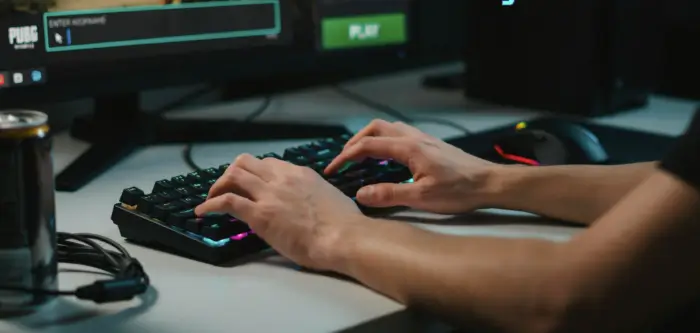
In PUBG Mobile, your name is more than a label. It appears above your character during matches, in kill feeds, on leaderboards, in squad lobbies, and in the memory of anyone who encounters you repeatedly. A plain default name fades into the background. A decorated name — one built with special symbols, unique fonts, and carefully chosen characters — registers differently. It signals intention, creates a recognisable identity, and in competitive circles, it becomes part of how you are known.
Name decoration in PUBG has grown from a niche practice among enthusiast players into a widely adopted form of in-game identity expression. Tools that generate decorated names have become genuinely useful utilities rather than novelties, because the Unicode character system that makes decoration possible is complex enough that building a good name manually requires knowledge that most players do not have and time that most players would rather spend playing. Understanding what name decoration is, how it works technically, and how to do it well — along with where to find tools that make the process fast and reliable — is the subject of this guide.
What PUBG Name Decoration Actually Is
Name decoration in PUBG refers to the use of characters outside the standard Latin alphabet to create names that display with unusual visual effects — stylised letterforms, symbols embedded within or around text, decorative borders, and combinations that cannot be typed on a standard keyboard. The decorated characters are not images or graphics; they are text characters that exist within the Unicode standard, the universal character encoding system that covers writing systems, symbols, emoji, and a vast range of special characters from across human languages and technical domains.
Unicode assigns a unique code point to each character, and within that enormous character space there are multiple sets of stylised Latin letterforms — mathematical bold, mathematical italic, mathematical fraktur, circled letters, squared letters, and many others — that visually resemble standard Latin letters while being technically different characters. A name written in mathematical bold Unicode characters looks bold and heavy. A name written in fraktur Unicode characters looks like old German Gothic script. Neither of these effects is achievable by typing on a standard keyboard, but both are displayable in PUBG because the game’s name field accepts Unicode text.
The practical result is that a player can have a name that appears, to other players, to use custom fonts, special symbols, or decorative elements that no standard keyboard can produce. From the perspective of the game system, the name is just a string of Unicode characters. From the perspective of every player who sees it in a match, it looks entirely different from a standard typed name.
The Unicode Basis for Decorated Names
Understanding the Unicode basis for name decoration helps explain both what is possible and what the limitations are. Unicode currently contains over one hundred forty thousand characters, covering virtually every writing system in active use along with thousands of symbols, technical characters, and stylistic variants. Within this space, the Unicode Mathematical Alphanumeric Symbols block — a specific range of code points — contains stylised versions of the Latin alphabet and numerals in bold, italic, bold italic, script, bold script, fraktur, bold fraktur, double-struck, sans-serif, sans-serif bold, sans-serif italic, sans-serif bold italic, and monospace variants.
Each of these variant sets covers the full Latin alphabet in both upper and lower case, plus the digits zero through nine. This means that any name composed of Latin letters and numbers can theoretically be re-expressed in any of these stylistic variants, producing a visually distinctive version of the same name without changing its phonetic content. A player named KING can render that name in bold, in fraktur, in script, or in double-struck characters — all reading as KING but each looking distinctively different.
Beyond the mathematical alphanumeric variants, the broader Unicode space contains thousands of symbols, geometric shapes, arrows, ornamental characters, and characters from non-Latin scripts that can be used as decorative elements alongside or between Latin letters. The Japanese katakana and hiragana blocks contain characters that are visually distinctive and pair interestingly with Latin text. The Braille patterns block contains dot arrangements that create textural effects. Box-drawing characters can create frame-like structures around names. Combining diacritical marks — Unicode characters designed to be placed above or below other characters — can create names that appear to have characters stacked vertically, producing an effect sometimes called “glitch text” or “zalgo text.”
Why Name Decoration Matters in PUBG Specifically
PUBG Mobile is one of the most played mobile games globally, with a particularly large and competitive player base across South Asia, the Middle East, and Southeast Asia. In communities with large player populations, the name becomes an important identity signal — it is how you are recognised by regular opponents, how you build a reputation in casual ranked play, and how squad members identify you across sessions. A decorated name that is visually distinctive and consistent across appearances creates a stronger identity signal than a plain name, because it is more memorable and more recognisable at a glance.
In the Arabic-speaking PUBG community specifically, name decoration — known as زخرفة ببجي — has developed into an art form with its own conventions and aesthetics. Arabic script itself has a natural decorative quality that pairs interestingly with Latin characters and Unicode symbols, and Arabic-speaking players have developed distinctive approaches to name decoration that blend Arabic and Latin elements with symbol borders and special characters in ways that are immediately recognisable as part of a specific gaming culture. The decorated name in Arabic PUBG communities carries social meaning beyond simple personal branding — it signals familiarity with the game’s culture and participation in its aesthetic conventions.
How to Build an Effective Decorated PUBG Name
Building a good decorated name requires thinking about several dimensions simultaneously: readability, visual impact, length, character limits, and consistency across different display contexts. A name that looks striking on one device may display differently on another if the recipient’s device does not support all the Unicode characters used, though this is less of a concern now than it was in earlier years as Unicode support has become near-universal on modern devices.
Readability is the first consideration. A decorated name that cannot be read defeats its own purpose — the name needs to communicate something, whether that is your actual gamertag, a word, or a concept. Names composed entirely of symbols with no recognisable letter structure are visually interesting but do not create the identity anchor that makes a name memorable. The most effective decorated names maintain legibility while adding visual richness through the choice of character style and the placement of decorative symbols.
Length is the second consideration. PUBG Mobile imposes a character limit on names, and decorated characters each count as a single character regardless of how visually complex they appear. A name with extensive symbol borders and multiple decorative elements may exceed the character limit even if the core text is short. Testing the assembled name in the decoration tool before attempting to apply it in-game avoids the frustration of building a name that cannot actually be used.
Visual balance is the third consideration. Effective decorated names tend to have a centre of gravity — the core text reads clearly, and decorative elements are placed around it in a way that frames rather than overwhelms. Symmetric arrangements, where decorative symbols mirror each other on both sides of the text, create a clean and intentional look. Asymmetric arrangements can work but require more careful construction to avoid appearing random.
For Arabic-speaking players looking to generate a styled زخرفة اسم ببجي — a decorated version of their chosen name — dedicated Arabic PUBG decoration tools offer styles and symbol combinations that are specifically suited to how Arabic text and Latin characters are combined in this gaming community. The tools handle the Unicode conversion automatically, presenting the finished name as a copyable string that can be pasted directly into the PUBG name field.
The Technical Process: From Tool to Game
The practical process of applying a decorated name in PUBG is straightforward once the name string is generated. The decoration tool accepts input — the text to be decorated, the style to apply, and any symbols to add — and outputs a string of Unicode characters that represent the decorated name. This string is copied from the tool and pasted into the PUBG Mobile name change field, which accepts Unicode text input.
Name changes in PUBG Mobile require a Rename Card, which can be obtained through in-game purchases or events. This means that name decoration is not a free or unlimited feature — each application of a new name costs one card, which gives the decision some practical weight. Building and previewing the name in a decoration tool before spending a card ensures that the result is what was intended before the change is committed.
Some decoration styles require specific Unicode blocks that are supported on all modern devices and displayed correctly across all platforms where PUBG Mobile runs. The mathematical alphanumeric variants and most common symbol characters in the Basic Multilingual Plane — the core Unicode range — display reliably across all current iOS and Android versions. Characters from supplementary Unicode planes, including some emoji and some less common symbol blocks, may display as empty boxes on older devices. Sticking to the character ranges that decoration tools specifically validated for PUBG avoids this risk.
Symbol Categories Used in PUBG Decoration
The symbols used in PUBG name decoration fall into several broad categories, each with different visual effects and different use cases.
Border and frame symbols are placed at the beginning and end of the name, or wrapped around it, to create an enclosed or framed appearance. Common choices include bracket variants, corner characters, and ornamental dividers from the Unicode Miscellaneous Technical and Dingbats blocks. These add visual weight to the edges of the name and help it stand out against the plain backgrounds where names are displayed in-game.
Star and geometric symbols — stars, diamonds, triangles, circles, and their filled and outlined variants — are placed within or around the name text as accent elements. These are among the most commonly used decorative elements in PUBG names because they are visually recognisable, display reliably, and add a sense of rank or achievement to the name’s appearance even when they carry no literal meaning.
Script and stylised letter variants replace the standard Latin letters in the name with characters from one of the Unicode mathematical or stylistic alphanumeric ranges. This is the core of font-style decoration — the name reads the same but looks different because a different Unicode character set was used for each letter. The effect ranges from subtle, as with sans-serif bold variants, to dramatic, as with fraktur or script variants.
Combining diacritical marks are placed after standard characters and render above, below, or through them, creating stacked or distorted text effects. Used sparingly, these can add a unique visual element to a name. Used extensively, they can make a name difficult to read — the balance depends on the specific effect the player wants.
See also: Why You Need a Charleston Bus Accident Lawyer After a Serious Crash
Name Decoration Across Gaming Cultures
PUBG is not the only game where name decoration has become a significant part of player identity culture. Free Fire, Call of Duty Mobile, and several other battle royale titles support Unicode name input and have active decoration communities. The tools and techniques that work for PUBG decoration are largely transferable across these games, though each game’s specific character limit and supported Unicode ranges may differ slightly.
The broader phenomenon of name decoration in gaming reflects how players use the customisation options available to them to create identity and community within games that otherwise offer limited personalisation. In a game where all players use the same mechanics and the same map, the name is one of the few genuinely personal elements — it travels with the player everywhere in the game and cannot be purchased or unlocked through play. The effort put into a decorated name is a form of personalisation that costs time and knowledge rather than in-game currency, which gives it a different kind of value among players who recognise the craft involved.
For players and gaming enthusiasts who follow broader gaming culture, community developments, and content across multiple titles, oneworldcolumnorg.org covers gaming and digital culture topics that place practices like name decoration in the wider context of how gaming communities develop shared aesthetics and identity conventions. The decorated PUBG name is a small but genuine example of a larger phenomenon: the way players make games their own within the constraints the game provides.
Choosing a Name Worth Decorating
Decoration enhances a name; it does not substitute for one. The underlying text — the word or phrase that the decoration is applied to — is the core of the identity, and the decoration amplifies whatever that core communicates. A well-chosen name that is then decorated effectively creates an identity that is both meaningful and visually distinctive. A name that was chosen without thought gains little from decoration beyond visual novelty.
Effective PUBG names tend to be short — three to eight characters — because shorter names fit more easily within character limits when decoration is added, read more quickly in the fast-moving environments where they appear in-game, and are easier to remember across encounters. They tend to be distinctive rather than generic — KING, PRO, or LEGEND appear in thousands of decorated forms, while a genuinely original word or phrase creates a more unique identity. And they tend to be consistent — a player who uses the same decorated name across sessions builds recognition that a player who frequently changes their name does not.
The decoration is the finishing layer on a name that already works. The best approach is to choose the name first, test how it reads undecorated, and then apply the decoration that best fits the character and aesthetic of the name. The result — a well-chosen name in a carefully selected decoration style — is the combination that creates the most durable and recognisable in-game identity.