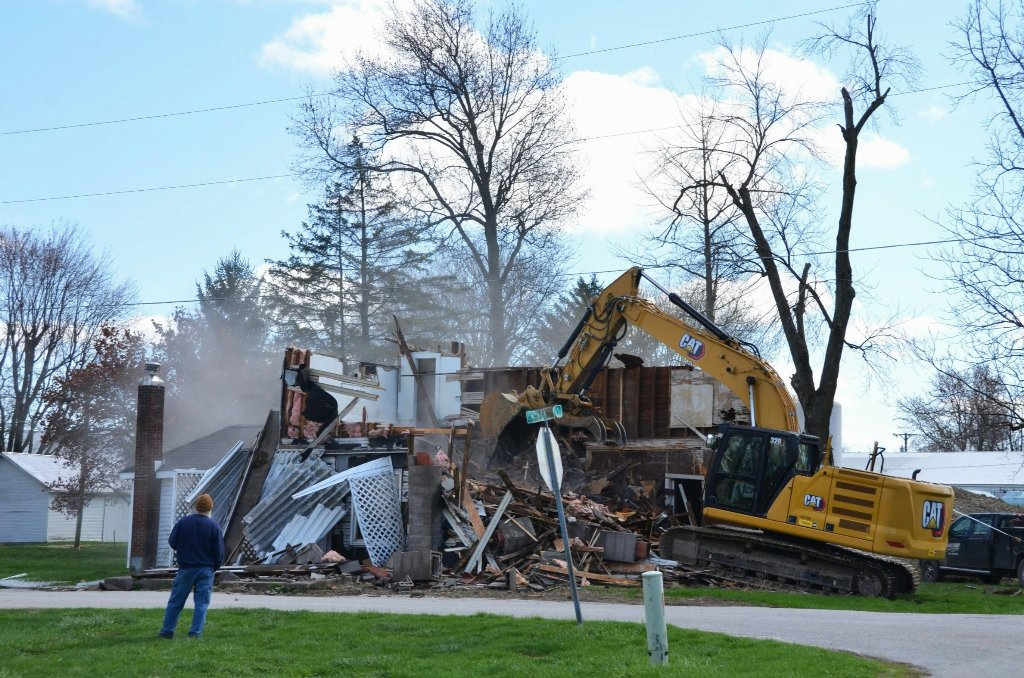
There’s a reason demolition looks so satisfying. Walls come down, structures collapse, and in a matter of hours something that took months to build is reduced to a heap. It’s fast, it’s dramatic, and it feels like enormous progress. Anyone who has swung a sledgehammer or watched an excavator go to work knows the strange pleasure of it. The knocking down is genuinely the easy part.
Then you’re standing in front of the pile, and the real work begins. Because everything you just brought down hasn’t gone anywhere. It’s all still there, in a bigger, heavier, more tangled mass than the thing that produced it ever appeared to be, and now it has to be sorted, loaded, hauled away, and disposed of properly. This is the part that gets underestimated on job after job, the part that eats budgets and blows out timelines while nobody’s watching. If you’re planning any kind of construction or demolition work, understanding the getting-rid-of-it side is what separates a job that runs smoothly from one that bogs down in its own debris.
The Volume Nobody Pictures
The first shock is always volume. A building, a wall, a slab, or a structure that looks like a defined, manageable object turns into a startling quantity of debris the moment it comes apart. Solid materials that were compacted and stacked into a structure expand into loose rubble that takes up far more space than the original ever did, and the pile that results is consistently larger than people expect when they picture the job beforehand.
Weight is the other half of the surprise, and it’s the one that really matters. Construction and demolition debris is dense. Concrete, brick, and masonry are enormously heavy, and even a modest demolition produces a tonnage that dwarfs what you’d guess by eye. This matters because disposal is driven substantially by weight, and because the sheer mass affects everything from how many loads you’ll need to shift to what it costs to take it away. People plan demolition around the visible size of what they’re removing and are then caught out by the invisible reality of how much material, by both volume and weight, that structure actually contained. Getting an honest estimate of the quantity upfront is the foundation of planning the rest.
Why It’s Not Just Rubble
If it were all clean rubble, disposal would be relatively simple. The complication is that demolition debris is a mixture, and the mixture is what makes it difficult. A demolished structure typically yields concrete and masonry, timber, metal, plasterboard, insulation, fixtures, and general waste, all coming apart together and landing in the same heap. Each of these is handled differently for disposal and recovery, and separating them out of a mixed pile after the fact is slow, labour-intensive work.
On top of the ordinary mix, demolition can uncover materials that require special handling, particularly in older structures, and these cannot simply be thrown in with everything else. Identifying and dealing with them correctly is both a safety matter and a legal one, and discovering them mid-job without a plan is a real disruption. The tangled, mixed nature of demolition waste is precisely why it’s harder to deal with than its volume alone would suggest. A neat pile of one material is easy. A jumbled heap of six, some of which need careful treatment, is a genuine logistical task, and treating it as though it were simple rubble is how the getting-rid-of-it stage turns into a bottleneck.
The Cost That Gets Underestimated
All of this feeds into the line item that construction and demolition budgets most reliably get wrong, which is disposal. It’s tempting to treat getting rid of the waste as a minor afterthought compared to the visible work of the project, and that assumption is exactly where budgets come unstuck. Disposal of heavy, mixed demolition debris is a substantial cost in its own right, driven by the weight, the volume, and the mixing that makes recovery harder and processing dearer.
Underestimating it has knock-on effects beyond the money. When the disposal budget runs short, the waste doesn’t stop being produced, so it accumulates on site, and accumulated debris slows everything else down. A project that didn’t cost the removal properly finds itself either paying more than expected partway through or grinding to a halt while it sorts out where everything’s going. The honest approach is to treat disposal as a real, sizeable part of the project cost from the planning stage, estimated on the actual volume and weight you expect rather than a hopeful guess. Getting that number roughly right upfront is far less painful than discovering it halfway through when the pile is growing and the budget isn’t.
Planning the Removal as Seriously as the Work
The fix for most of this is simply to plan the removal with the same seriousness you plan the demolition itself, rather than treating it as something to figure out once the debris exists. That means working out in advance how much waste you’ll generate, how it will be contained, and how it will leave the site at a pace that keeps the work area clear. Debris that goes as fast as it’s produced never becomes the obstacle that stalls the job.
In practice this usually means arranging construction skip bin hire sized and scheduled to match the volume and timeline of the work, so there’s always capacity for the debris coming off the job and it’s being cleared on a rhythm that suits the pace of demolition. Getting the sizing right matters, since heavy demolition waste fills and weighs down containers faster than lighter material, and getting the scheduling right means you’re not waiting on collections while debris backs up. This is the difference between a site where material flows steadily off the job and one where it piles up and everything slows around it. Planning it properly, before the first wall comes down, is what keeps the hard part from becoming the part that derails the whole project.
See also: Make the Most of Sacramento Bus Tours for Groups
Doing It Right Rather Than Just Fast
The final thing worth saying is that there’s a difference between getting rid of demolition waste fast and getting rid of it well, and the well matters more than it first appears. Separating the streams where you can, keeping concrete, metal, timber, and clean rubble apart, means a great deal of demolition waste can be recovered and reused rather than sent to landfill, since crushed concrete becomes aggregate and metal is valuable and endlessly recyclable. That’s better environmentally and often cheaper, since sorted material is easier and less costly to process.
Using licensed, reputable disposal is the other half of doing it right, and it’s not optional. Anyone producing construction and demolition waste carries a duty of care for how it’s handled, meaning it needs to go to properly licensed facilities and be dealt with correctly, with the documentation to show it. Cutting corners here, using the cheapest unlicensed option or dumping waste improperly, exposes you to penalties and liability that dwarf any saving, and it can follow the project back to you long after the site is cleared. Doing the disposal properly protects your budget, your timeline, and your standing, and it’s simply part of running a professional job. The demolition may be the easy, satisfying part, but it’s how you handle everything that’s left that determines whether the project actually finishes clean.